Battery Operated Fuel Transfer Pumps for Remote & Off-Grid Fueling
Feb 18,2026 | Brearo
When fuel needs to be transferred in remote or off-grid locations, access to electricity is often the first challenge. Farms, construction sites, roadside service points, and emergency situations don’t always offer a reliable power outlet.
This is exactly where a battery operated fuel transfer pump becomes the most practical solution.
Designed for cordless operation, a fuel transfer pump battery powered system allows users to move fuel efficiently—even when no external power source is available.
Why Power Access Matters in Fuel Transfer
Many fuel transfer systems assume access to AC power or vehicle wiring. In real-world conditions, that assumption often fails.
Common scenarios include:
-
Equipment operating far from buildings
-
Temporary or mobile job sites
-
Field refueling during harvest or construction
-
Emergency fueling during power outages
In these situations, portability and independence from fixed power infrastructure are essential.
What Is a Battery Operated Fuel Transfer Pump?
A battery operated fuel transfer pump uses a self-contained power source—typically a rechargeable battery or a standalone 12V battery—to move fuel without relying on wall outlets or generators.
Unlike traditional electric pumps, battery powered fuel transfer pumps are built specifically for cordless, off-grid operation, making them ideal for environments where power availability is uncertain or nonexistent.
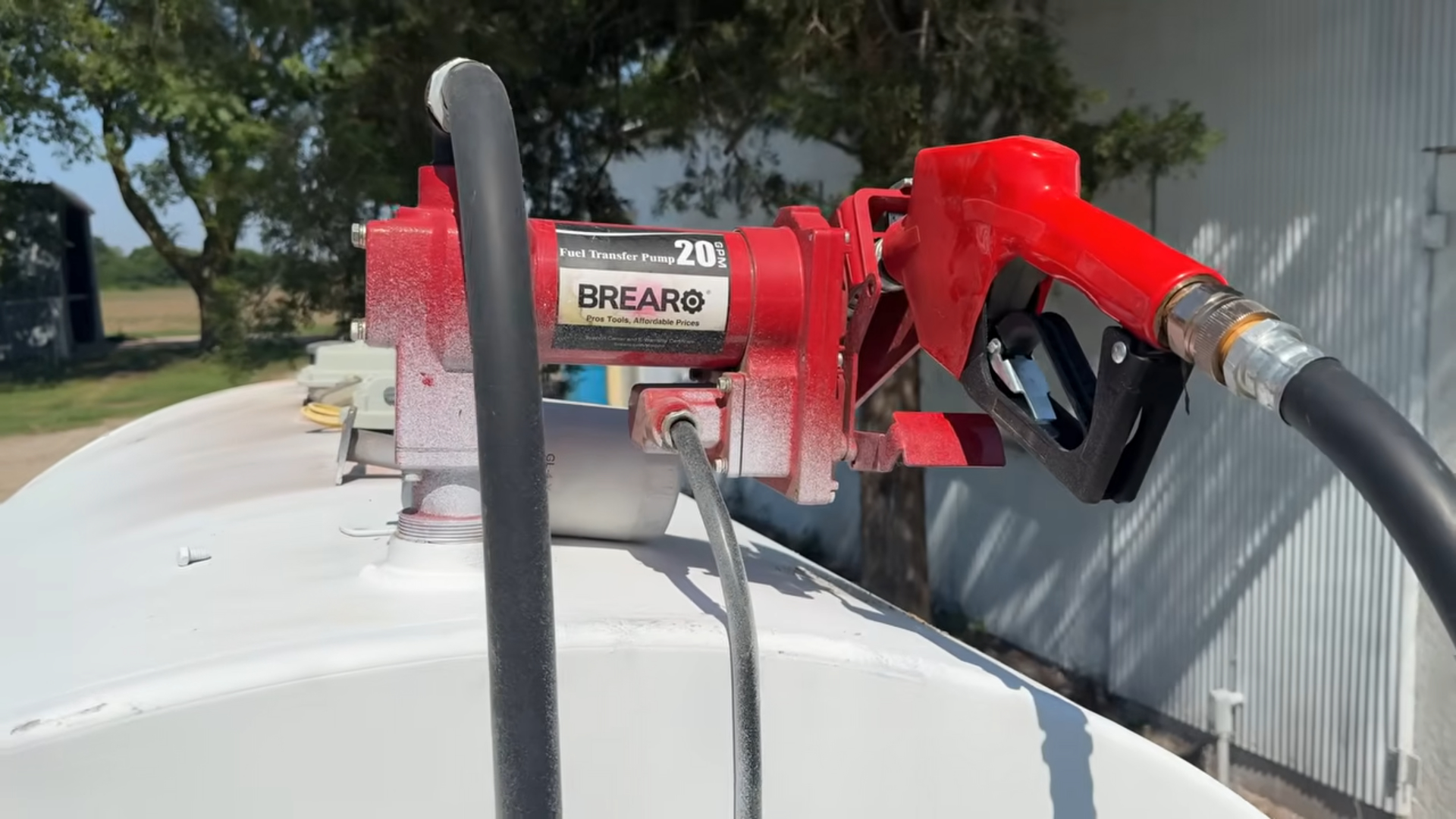
Cr:@hardworkingmanoutdoors (YouTube)
Key Advantages of Battery Powered Fuel Transfer Pumps
1. True Cordless Operation
The primary benefit of a fuel transfer pump battery powered design is independence from external power. No extension cords, no generators, and no vehicle hookups are required during operation.
This allows fueling to happen exactly where the equipment is located.
2. Faster Deployment in Remote Locations
Battery operated pumps are ready to use as soon as the battery is charged. There is no need to plan power routing or reposition equipment closer to outlets, which significantly reduces downtime on job sites.
3. Increased Safety in Off-Grid Environments
Cordless operation minimizes:
-
Tripping hazards from power cables
-
Electrical risks in wet or uneven terrain
-
Clutter around fueling areas
Many battery operated fuel transfer pumps also integrate safety-focused designs such as sealed housings and controlled flow mechanisms.
Where Battery Operated Fuel Transfer Pumps Perform Best
Battery powered pumps are particularly effective in environments where power access is limited or unpredictable.
• Remote Agricultural Fields
Fueling tractors and harvesters directly in the field eliminates unnecessary travel back to centralized fueling stations.
• Construction and Temporary Job Sites
Early-stage construction sites often lack permanent power infrastructure. Battery operated pumps support uninterrupted equipment operation from day one.
• Roadside and Mobile Fueling
Service vehicles and roadside maintenance crews benefit from portable fueling solutions that operate independently of vehicle electrical systems.
• Emergency and Backup Fuel Transfer
During power outages, battery operated fuel transfer pumps offer a reliable way to move fuel when AC power is unavailable.

Cr:@hardworkingmanoutdoors (YouTube)
Battery Operated vs. Other Fuel Transfer Pump Types
While DC and 12V fuel transfer pumps are commonly used with vehicles or fixed power systems, battery operated fuel transfer pumps are designed specifically for situations where no external power source is accessible.
This distinction is important for users who prioritize mobility and flexibility over permanent installations.
How to Choose the Right Battery Operated Fuel Transfer Pump
Before selecting a pump, consider the following factors:
1. Battery Capacity and Runtime
Evaluate how much fuel you typically transfer in one operation and ensure the battery capacity supports that workload without interruption.
2. Flow Rate Requirements
Higher flow rates reduce fueling time, which is especially valuable for larger equipment or multiple refueling tasks.
3. Fuel Compatibility
Confirm that the pump is rated for the specific fuel type you handle, such as diesel or gasoline.
4. Durability for Field Conditions
Look for designs intended for outdoor and industrial environments, including corrosion-resistant materials and reinforced components.
5. Safety-Oriented Design
Features such as leak-resistant fittings and stable mounting options improve reliability during off-grid use.
Why Battery Operated Fuel Transfer Pumps Are a Smart Investment
As job sites become more mobile and decentralized, fuel transfer solutions must adapt. A battery operated fuel transfer pump offers flexibility that traditional powered systems cannot match.
For professionals working in remote locations, battery powered pumps reduce dependence on infrastructure while maintaining efficiency and control.
Final Thoughts
Fuel transfer doesn’t always happen where power is available. In those situations, a fuel transfer pump battery powered system delivers the portability, safety, and convenience required to keep operations moving.
Whether for agriculture, construction, mobile service, or emergency preparedness, battery operated fuel transfer pumps provide a reliable solution—no outlet required.
Comment